

August 12, 2026
Oushak Rugs: History, Designs & Antique vs. Modern Turkish Oushaks
Historic Turkish Oushaks from Uşak can be rich reds and blues. The pale cream rugs people know from magazines are a later look. Both share the same large-scale drawing.
If you have heard “Oushak” from a designer or an online listing, you have probably seen a pale cream-and-blue rug with big, open flowers. That look is real, and it is popular for a reason. It is not the whole story.
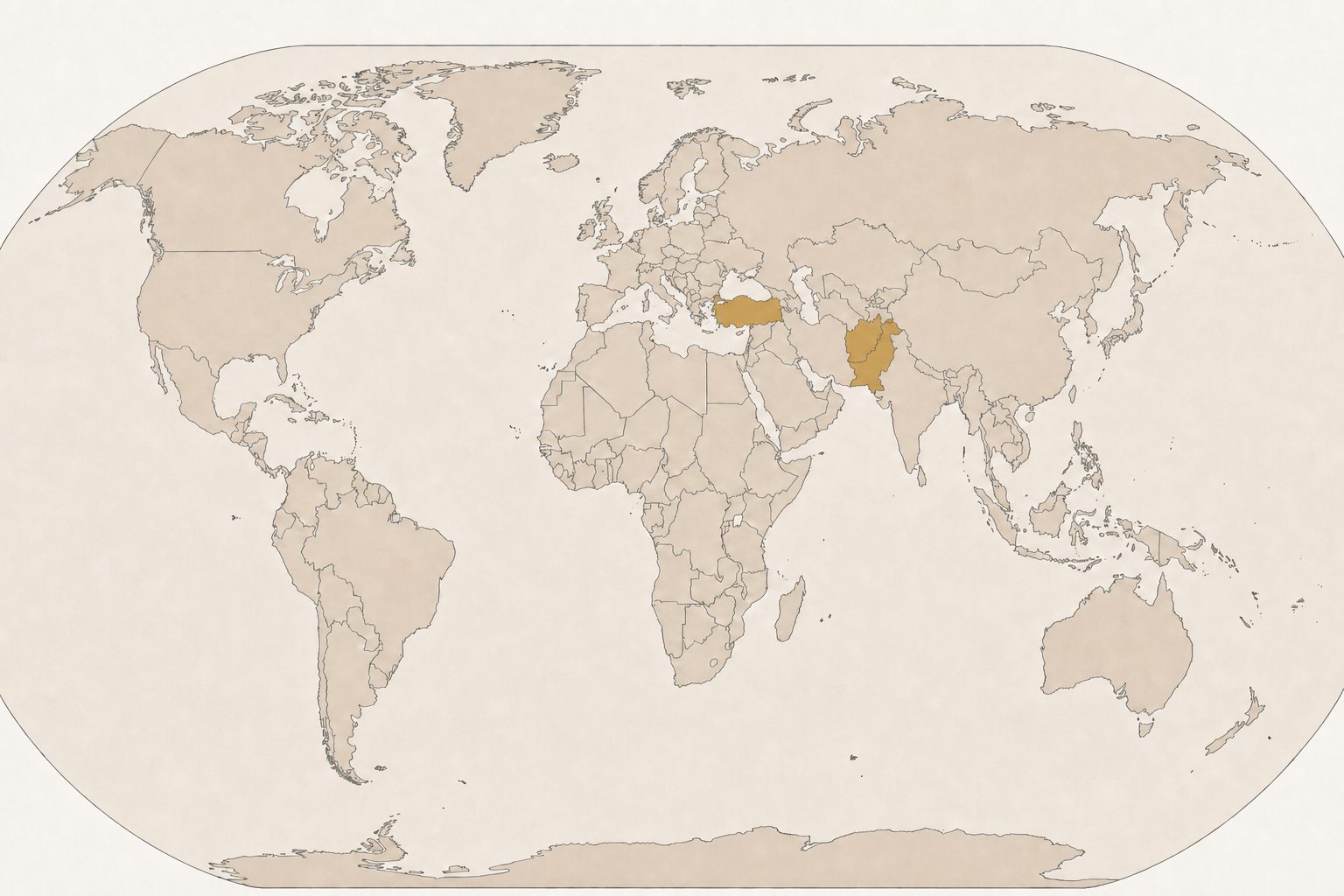
Oushak rugs take their name from Uşak, a historic weaving city in western Anatolia, in present-day Turkey. In English you will also see Ushak. Historically, Uşak was one of the great carpet centers of the Ottoman world. Hand-knotted wool carpets from the region were being made by at least the late 1400s and became internationally important in the 1500s and 1600s: large-scale drawing, strong geometry, bold medallions, stylized flowers and arabesques, rich color, and substantial wool.
Today the name is much broader. You may see a rug labeled Oushak, new Oushak, Turkish Oushak, Oushak-style, Oushak-inspired, or modern Oushak. Those words do not always mean the same thing. An antique Turkish Oushak is a historic carpet tied to that Anatolian tradition. A new Oushak-style rug uses the same oversized floral language, and it may be woven in Turkey, Afghanistan, Pakistan, or elsewhere. We mark origin on the map and on the tag. Neither category is automatically “the real one” and the other a fake. They are different chapters of the same design language.
The city of Uşak
Uşak sits in western Anatolia, a long-standing Turkish weaving country. In the Ottoman period it became especially known for large pile carpets, made for use inside the empire and for export. Historic Oushaks were prized in Europe. They show up in Renaissance and later paintings, under rulers, merchants, and other important figures, sometimes on tables rather than on the floor.
That tells you what they were. These were luxury textiles that traveled internationally centuries ago, not ordinary mill flooring.
Ottoman and Turkish, not Persian
Oushak weaving belongs to the Ottoman and Anatolian world. Ottoman decoration used medallions, arabesques, stylized flowers, leaves, vines, geometry, and repeating ornament. Weavers in Uşak put those ideas into large wool carpets.
Oushak rugs are Turkish. They are not Persian rugs, and they are not “Persian-style rugs from Turkey.” Motifs moved around the Islamic world, so you will see family resemblances. The tradition is still its own.
Classical antique Oushaks
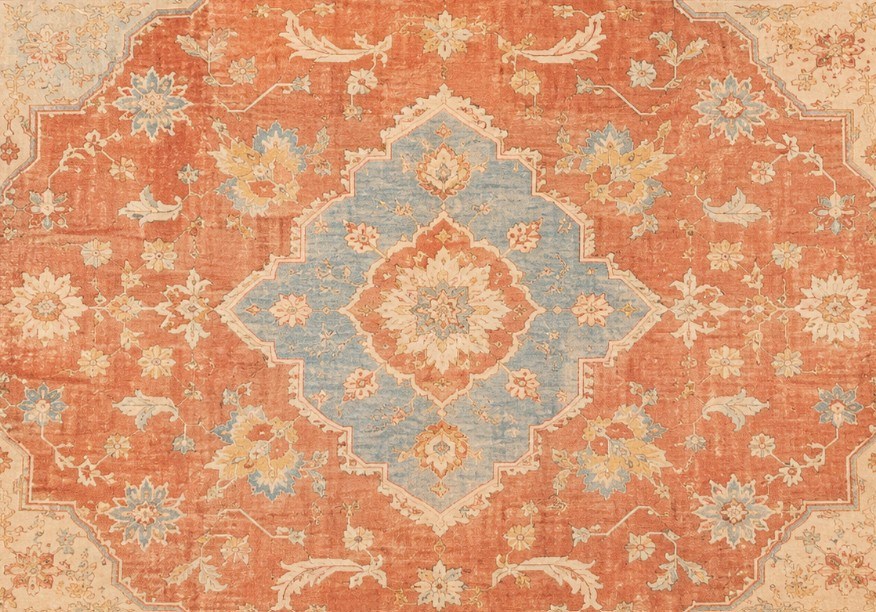
The great early carpets of the 1500s and 1600s often look nothing like the pale magazine Oushak. Classical examples are associated with a strong palette: rich red, brick, deep madder, dark blue, indigo-like blue, yellow, gold, ivory or white accents, and green. The color can feel bold and warm. The cover on this page is that kind of field: terracotta, dusty blue, cream, a large medallion you can read from across the room.
Not every antique Oushak is dark or red. Later antique periods used many palettes. Classical early color and later antique color are not the same thing.
There is no single Oushak pattern.
Star Oushak. Large star-shaped medallions repeat across the field. The design is bold and architectural, not tiny and delicate. Surviving sixteenth-century Star Oushaks sit in major museums. Similar carpets appear in Renaissance European paintings, which is how far they traveled.
Medallion Oushak. Very large medallions, sometimes so big they seem to run off the edge. You are not looking at a small stamp in the middle. You are looking at a piece of a much larger composition. That oversized scale is central to historic Oushak design.
Western Anatolia also produced prayer designs, repeating geometrics, arabesques, stylized florals, and other layouts. Not every rug from the Uşak region is a Star or a Medallion Oushak.
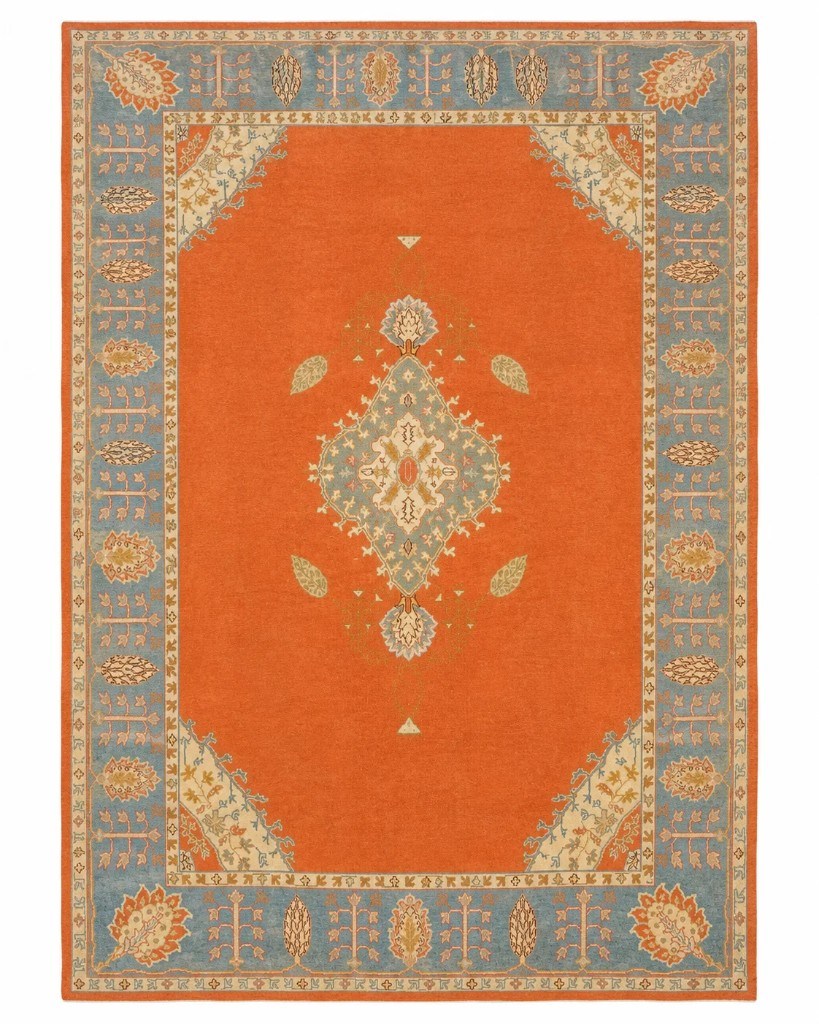
This one is in the showroom. T-2093 is an antique Turkish Oushak, 10'3" x 13'. The field is a warm terracotta with a large stepped medallion in powder blue and ivory, open space around it, and a blue palmette border. That is the historic Oushak scale: big drawing, strong color, not a pale cream field. See it on the floor, or ask us to pull it when you visit.
Why the drawing feels so large
Oushak motifs are often unusually big for the size of the rug. Palmettes, medallions, flowers, leaves, and vines stretch across wide parts of the field. Compared with a Persian carpet built from thousands of small repeats, an Oushak can feel open, relaxed, architectural, and easy to read from the doorway. That scale is why Oushak-inspired designs sit so well in modern rooms. The pattern does not chatter.
How historic Oushaks are made
Historic Oushak carpets are hand-knotted pile rugs, traditionally mostly wool. Documented classical examples may have wool pile, wool warp, and wool weft. The pile is the surface you touch. Warp and weft are the structure underneath.
They commonly use the symmetrical knot, also called the Turkish or Gördes knot. Knot count is only one fact about a handmade rug. A great Oushak can be more coarsely knotted than a fine Isfahan or Kashan and still be important. The beauty is in the wool, the color, the large drawing, the texture, and the overall proportion. Newly made rugs sold as Oushak do not all share the same foundation or finish. Construction varies.
Antique Oushaks of the 1800s and early 1900s
Weaving in Uşak did not stop after the classical period. Many antique Oushaks in homes and in the trade date from the late nineteenth or early twentieth century, not from the 1500s. They often look different: large floral sprays, palmettes, open fields, oversized medallions, loose scrolling vines, all-over botanical drawing. Color can be softer and more mixed: peach, soft terracotta, ivory, turquoise, light blue, beige, rust, soft red, muted greens.
A genuinely antique Turkish Oushak can be light and airy. Do not assume “old” means “dark red.”
The modern light Oushak
This is the rug most customers recognize now. In current interiors, “Oushak” often means a newly made carpet in ivory and cream, beige, pale blue, soft green and sage, dusty rose, faded terracotta, light gold, gray-blue, or muted brown. The motifs are softened versions of the old language: large palmettes, stylized flowers, vines, medallions, corners, open all-over fields. The whole thing is quieter and less saturated than a classical Ottoman Oushak.
People like them because they bring Oushak scale into rooms that want neutrals: light hardwood, limestone, linen, pale upholstery, contemporary furniture, transitional houses, English-inspired rooms, traditional rooms that still want a light floor. These rugs are a modern continuation of historic Oushak drawing. They are not fakes because they are new.
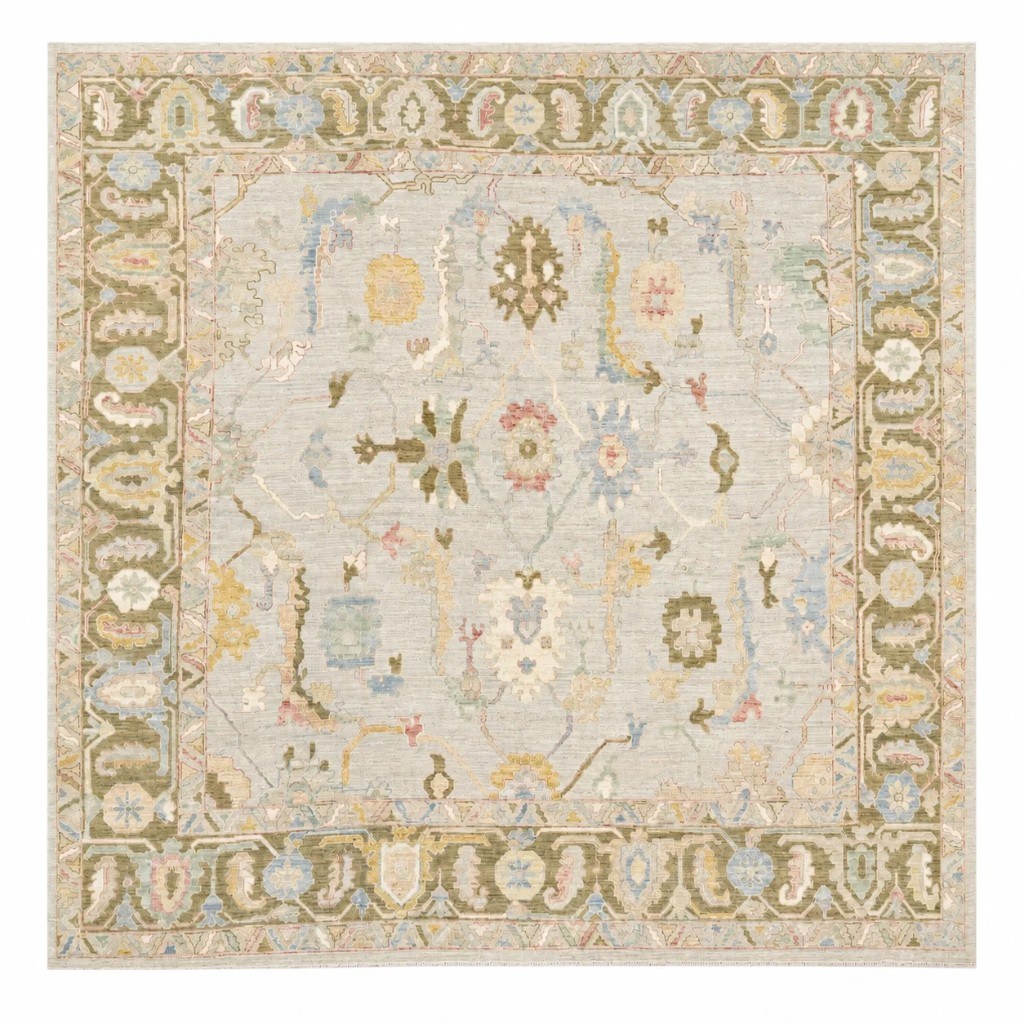
T-4628 is a new Oushak, almost square at 10'1" x 10'2". The field is a pale grey with open palmettes and vines in sage, blue, gold, and a little dusty rose, plus a wide sage border. Same large-scale Oushak drawing as an antique, in a palette built for a light room. See it on the floor, or ask us to pull it when you visit.
Oushak versus Oushak-style
Historic Oushak means the carpet tradition of Uşak and western Anatolia. Today “Oushak-style” is also a design word used around the world. A newly made rug with that pattern is not necessarily woven in Uşak, or even in Turkey. Modern Oushak-style rugs are produced in several weaving countries.
Not every rug advertised as Oushak was hand-knotted in Uşak. Check the individual piece: country of origin, materials, construction, age, whether it is hand-knotted, whether it is Turkish or only Oushak-inspired. That is information, not an accusation. Antique Turkish Oushak points to the historic Turkish tradition. Oushak-style can mean a newer rug that uses the large-scale Turkish look wherever it was made.
Why are new Oushaks so much lighter?
A museum Oushak and a cream designer Oushak can look like different species. Decorative taste changed. Designers often want softer color, more neutral rooms, less contrast, open pattern, a washed or muted surface. Producers reinterpret traditional Oushak drawing in palettes that fit those rooms. Some new rugs are washed or finished to soften the color. We do not call that “antique washing” unless it is true of that rug.
The pale Oushak look is inspired by historic Turkish design. The very soft neutrals that dominate showrooms now are largely a modern decorative choice, not the only traditional Oushak palette.
Faded is not the same as antique
A rug that looks faded is not automatically old. New rugs can use muted wool, pale dyes, finishing, or low-contrast drawing to look aged. Genuine antiques also develop wear, patina, color shift, softening, and the marks of use. Age comes from the whole rug: construction, materials, condition, how it is woven, and history when you have it. Color alone cannot date a carpet.
Color, as a tendency
Classical historic Oushak: rich red fields, dark blue, strong yellow, gold, green, ivory accents, real contrast.
Later antique Oushak: rust, terracotta, peach, turquoise, light blue, ivory, muted gold, softer reds.
Contemporary Oushak and Oushak-style: cream, ivory, beige, pale blue, sage, blush, soft terracotta, taupe, muted gold, low-contrast neutrals.
These are tendencies, not a checklist you can use to authenticate a rug.
Historic carpets were traditionally dyed with natural sources before modern synthetics became common. That does not mean every antique Oushak is naturally dyed, or that every new Oushak is synthetic. Good new rugs can use natural dyes. Judge materials on the piece in front of you.
Oushaks in European pictures
Historic Turkish carpets were prestige objects in Europe. Oushaks appear in paintings of rulers, nobles, merchants, and wealthy families, on tables, under important sitters, across furniture, in ceremonial rooms. Expensive carpets were treated as textiles of rank, not only as something to walk on. Star Oushaks can be recognized in important sixteenth-century European paintings. That is part of why the name still carries weight.
Antique or new: neither is automatically better
A genuine antique Turkish Oushak is admired for history, hand-knotted wool, large-scale pattern, color that has lived, individual drawing, and a link to Ottoman and Anatolian art. Surviving classical carpets can be museum objects. Nineteenth- and early-twentieth-century Oushaks remain highly desirable antiques. Not every old Oushak is valuable. Condition, age, rarity, design, color, size, quality, and overall beauty all count.
New Oushaks and Oushak-inspired rugs are popular because they offer that large-scale pattern, soft color, handmade character, wool underfoot, sizes that fit current houses, and a traditional design that does not feel stiff. For many rooms, a newer Oushak is the practical choice: a specific size, a lighter palette, more even condition, less worry about putting an important antique in daily traffic.
Antique Oushak if you want age, patina, traditional color, and period craft. New Oushak if you want a lighter look, a particular size, consistent condition, and an easy fit with a newly designed room. Both can be hand-knotted and well made. The right buy is the individual rug and the room.
In a house
Large motifs keep Oushaks from looking busy at a distance. They work in living rooms, dining rooms, bedrooms, libraries, entries, great rooms, traditional houses, contemporary rooms, transitional spaces, English-inspired rooms, Mediterranean rooms, and quiet modern rooms that need warmth. A darker antique can anchor a room. A lighter new Oushak can open it. A faded antique can sit between those two.
What the name is carrying
Oushak weaving is a major chapter of Turkish and Ottoman textile history. It started centuries before the current cream-rug trend. Workshops in Uşak made carpets that went into European palaces, churches, wealthy houses, and paintings. Oversized medallions and bold ornament became one of the most recognizable languages in carpet design. Weavers and designers still work in that language.
That is why a pale cream Oushak-style rug in an Atlanta living room can still trace its drawing back to western Anatolia, even when the modern piece differs in color, construction, age, and country of manufacture.
Today’s pale, softly colored Oushak rugs did not appear out of nowhere. They are modern readings of one of Turkey’s great historic carpet traditions. Antique and modern versions can look dramatically different. Both are connected through oversized floral forms, open drawing, and decorative scale that have made Oushak designs desirable for centuries.
Browse Oushak rugs in our collection, or visit the showroom on Miami Circle in Atlanta.